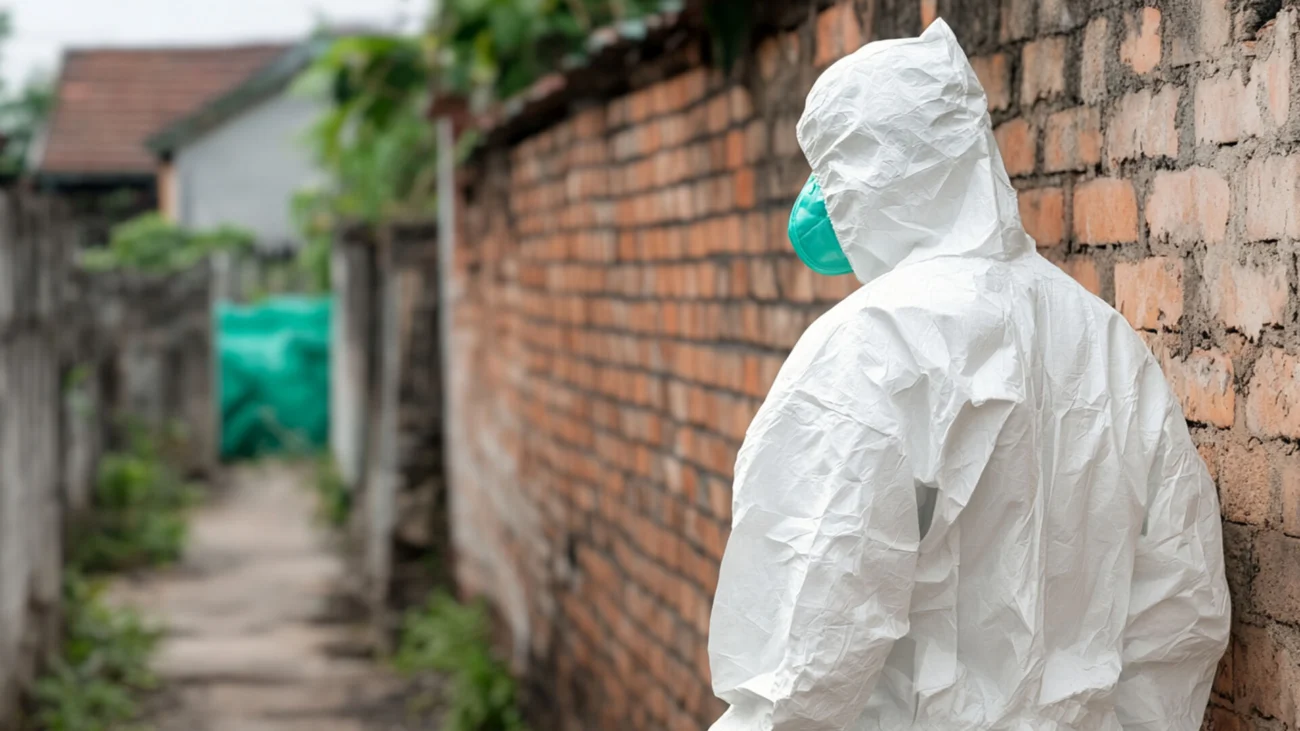

The Democratic Republic of the Congo (DRC) is no stranger to Ebola. Since the virus was first identified in 1976, the country has experienced more than a dozen outbreaks, including the devastating 2018-20 epidemic that claimed more than 2 200 lives.
Yet the current outbreak, declared a Public Health Emergency of International Concern by the World Health Organization (WHO) on 17 May, has surpassed 670 confirmed cases, mainly in the DRC, but also in Uganda, with increasing concerns that it’ll spread into South Sudan. Over 135 deaths have been confirmed. But these figures likely represent only a partial picture, given persistent challenges in surveillance, testing and case reporting.
What makes this outbreak different isn’t only the disease itself, a variant without a vaccine or effective treatment, but how it’s unfolding.
Following substantial reductions in US global health funding in 2025, many countries face weakened surveillance systems, reduced outbreak response capacity and growing uncertainty over how to address the gaps left by traditional donors. The current outbreak offers an early glimpse into how the global health community – and the EU – can respond in an era of shifting donor priorities and constrained resources.
A new reality for outbreak response
For decades, US support formed the backbone of global outbreak preparedness. Programmes like USAID helped sustain surveillance networks, laboratory systems, logistics infrastructure, workforce development and emergency response mechanisms. Funding cuts eliminated key personnel in surveillance and outbreak response, including a designated Ebola response team.
The US withdrawal exposed vulnerabilities that many experts warned about when cuts were announced. During outbreaks, where rapid detection, contact tracing and community engagement are critical, weakened systems can quickly undermine containment efforts. The International Rescue Committee’s DRC Country Director described a situation where ‘funding cuts have left the region dangerously exposed’, leaving health facilities without essential protective gear or surveillance capacity.
This situation makes it ‘nearly impossible’ to isolate and trace cases. This gives renewed significance to the need for resilience, a term that has become ubiquitous in global health discourse.
The EU’s resilience test
Since Covid-19, the EU has positioned itself as a stronger global health actor, notably through the recently adopted Global Health Resilience Initiative (GHRI). It prioritises strengthening country-led health systems, improving preparedness and response capacities, diversifying supply chains and manufacturing capabilities, fostering trust in science and supporting a more coherent global health architecture.
The GHRI considers health resilience as mutually beneficial, linking support for partner countries with the EU’s broader competitiveness and security objectives. These priorities align closely with the needs exposed by Ebola and other emerging health threats.
The EU has already contributed financial and technical support to response efforts. Over recent years, it’s also invested substantially in African surveillance capacity, research and preparedness, including Ebola-focused research and wastewater surveillance efforts.
These are a ‘practical expression’ of the GHRI’s aims. But they also highlight a broader reality – in a world where traditional donors are retreating, the expectations on other actors are rising.
Two critical challenges
Two issues stand out in the current response: coordination and misinformation.
As additional actors step in, the global health landscape is getting more crowded. While any new support is obviously welcome, it risks creating confusion over roles, responsibilities and decision-making processes.
USAID was the previous go-to ‘convener’ in such crises. That’s no longer the case and the US have ‘burned their credibility’. The US withdrawal has also been ‘undercutting’ the WHO’s ability to effectively coordinate the outbreak response. Coordinating emergency responses has become as important as having enough financial resources.
The EU recognised the importance of multistakeholder coordination both in the 2022 EU Global Health Strategy and the GHRI, positioning itself as a facilitator and convener. Yet embedding coordination as a policy objective isn’t the same as actually delivering it. As global health governance becomes more complex, the EU will need to show how it can translate its ambitions into more effective collective action.
At the same time, misinformation and mistrust continue to undermine outbreak control.
Social and cultural beliefs, community perceptions and misinformation all shape how individuals understand and respond to disease, particularly during outbreaks. The WHO has identified misinformation as a major threat to global health and highlighted the importance of building resilience to misinformation as a critical component of effective outbreak preparedness and response.
This isn’t anything new. The pandemic showed how misinformation can erode public trust and weaken emergency responses. Early detection, contact tracing and treating Ebola rely on community cooperation and trust. Reports suggest persistent scepticism about the existence and origins of the ongoing Ebola outbreak, concerns about external actors and the circulation of false narratives that discourage engagement with health authorities.
Here too, the EU’s GHRI explicitly aims to promote trust in science and counter misinformation, calling for closer cooperation with partner countries on public health communication and coordinated efforts to address false and misleading health information.
While the initiative sets a clear strategic direction, it provides limited details on the specific mechanisms that the EU will use to provide support, including during global health emergencies.
As outbreaks become increasingly shaped by information dynamics, the EU’s future actions will need to move beyond strategic recognition towards practical mechanisms that strengthen community trust, support locally led communication efforts and build resilience to misinformation before crises emerge.
Resilience in practice
The Ebola outbreak isn’t a question of whether the EU can replace the US, nor whether it can become the world’s largest health donor. Instead, it provides an early opportunity to demonstrate how the GHRI’s ambitions can be operationalised within an increasingly complex and rapidly evolving global health landscape.
That means coordinating partners, supporting country-led priorities, building trust with communities and helping to bridge critical gaps in preparedness and response. It also means demonstrating flexibility and responsiveness rather than relying solely on long-term development frameworks.
The GHRI provides a positive vision for a more resilient and cooperative global health system. As global health governance continues to evolve, resilience won’t be measured by the strategies governments publish, but rather their ability to respond when systems come under pressure.
The question for the EU is whether it’s prepared to translate its vision of resilience into a tangible reality.