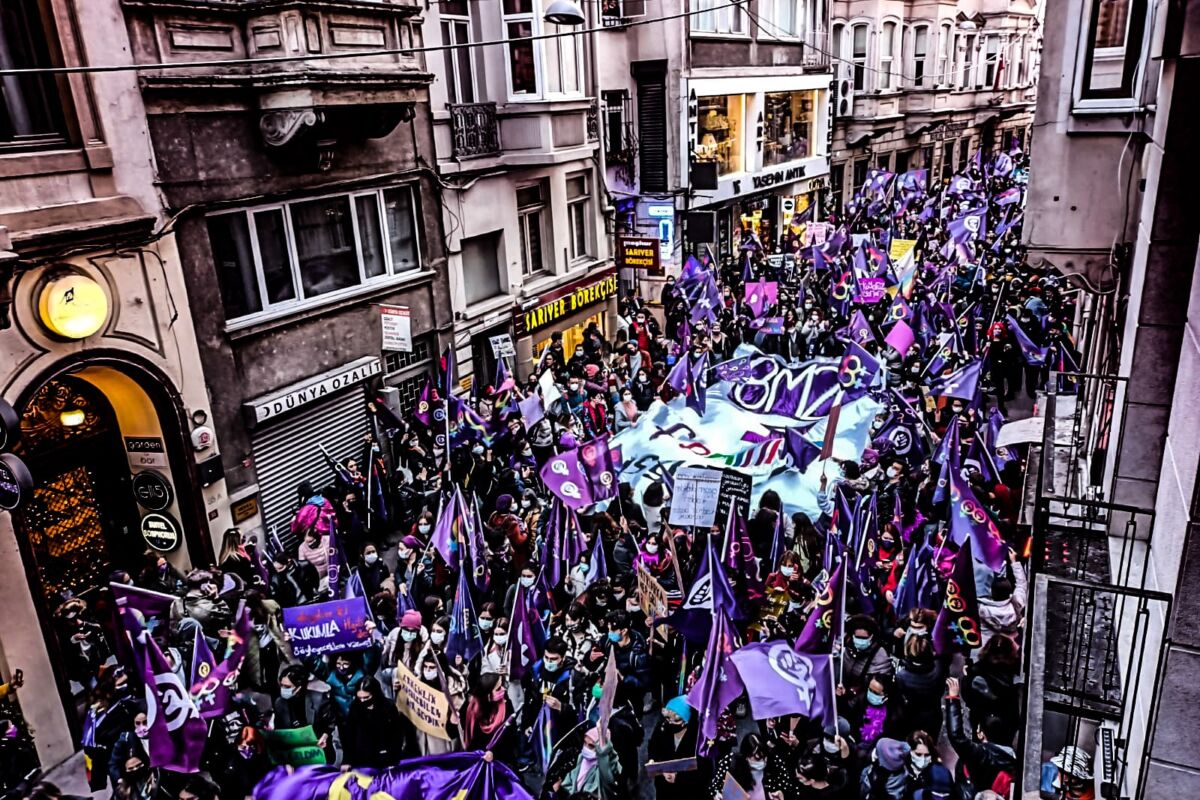

The headlines are clear: women are burning out at higher rates than men. From the BBC to CNBC and Psychology Today, media outlets have sounded the alarm, especially since the pandemic, framing burnout as a ‘woman’s issue.’
Popular narratives point to women’s ‘double shift’ of paid and unpaid labour, cultural expectations or even internalised perfectionism. But what if the gender burnout gap isn’t about gender at all? What if it’s actually about the types of jobs women hold?
The wellbeing divide – a matter of job quality
The European Working Conditions Survey (EWCS) provides answers to these questions. The EWCS is a large-scale, cross-national survey conducted by Eurofound every five years, covering tens of thousands of workers across Europe and widely used by researchers and policymakers to assess trends in job quality and working conditions.
While the full results on exhaustion and (dis)engagement are not yet in, first findings from the 2024 survey show that women have a lower subjective wellbeing score (68.0 vs 70.6) and higher anxiety levels (26 % vs 16 %) than men. The gap is real, but the above cultural explanations are missing a crucial structural point – job design.
Decades of research show that job characteristics such as emotional demands and autonomy are primary predictors of exhaustion and disengagement, which are the core elements of burnout. Jobs with low autonomy and high emotional demands are burnout factories, regardless of who holds them. Women aren’t inherently more prone to burnout; they’re disproportionately concentrated in jobs that are built to burn people out.
How do women end up in these burnout factories? It’s the result of continued vertical and horizontal segregation in the labour market. Women are more likely to be stuck under the glass ceiling (vertical segregation) or in ‘pink-collar’ sectors, where emotional labour is a core requirement (horizontal segregation). The outcome is a systemic imbalance where job quality – not gender – drives burnout.
The pink-collar ghetto
Take sectoral segregation, which remains stark, even in 2026. Women make up 77.8 % of healthcare workers and 72.5 % of education workers. These jobs require constant emotional regulation – soothing patients, managing children and families and navigating bureaucratic hurdles – exposing women to higher emotional demands than men. In the 2024 EWCS first findings, compared to men, women report higher levels of having to handle angry clients (18 % vs 12 %), facing emotionally disturbing situations (13 % vs 8 %), all while feeling the need to hide their own emotions (29 % vs 22 %).
Adverse social behaviour in these high-interaction workplaces further compounds the challenges. Women report higher exposure to verbal abuse (12 % vs 10 %), humiliating behaviour (9 % vs 6 %), bullying (5 % vs 3 %), unwanted sexual attention (4 % vs 1 %) and sexual harassment (2 % vs 0.5 %). Overall, women score lower on the social environment index than men (76 vs 79).
High emotional demands, set in adverse social environments, are the first ingredient in the recipe for burnout.
The glass ceiling
Vertical segregation inside organisations is equally damaging and equally persistent, as women remain dramatically underrepresented in leadership roles. The 2024 EWCS first findings shows that only 34 % of managers are women, with minimal progress made over the past 25 years.
While 49 % of men say their job offers good career advancement, only 43 % of women report such prospects, another gap that has persisted over the last 15 years. Women are also far more likely to have a female boss (52 %) than men (18 %), reflecting how women’s leadership is limited to already female-dominated sectors.
This glass ceiling keeps women in front-line positions with less control over their work. Meanwhile, men are more likely to hold positions where they can set their own schedules, delegate tasks and influence outcomes.
The consequences are stark. Only 43 % of women report having some or complete control over their working hours, compared to 50 % of men. Even within the same job and controlling for age, seniority and education, women tend to be subjected to more forms of workplace control than men.
At stake is decision-making power over how work is organised. When women are excluded from leadership, they’re also excluded from shaping the conditions of their own labour.
A structural problem, not a cultural or personal one
Focussing on individual resilience, mindfulness or telling women to ‘lean in’ distracts from the root causes: how we value and design work. The glass ceiling and the ‘pink-collar’ ghetto continue to shape who gets burned out. Fixing the gender burnout gap requires dismantling occupational segregation. It requires redesigning jobs so that autonomy, manageable emotional demands and safe social environments aren’t privileges reserved for the few.
First, we must break the leadership ceiling. Transparent hiring, pay equity audits and targeted training can help distribute autonomy and career progression equally. Women can’t afford to wait another 20 years for equal representation in leadership roles.
Second, we need to redesign high-stress roles in healthcare, education and care work to reduce the emotional and administrative burdens that fuel burnout. This means better staffing ratios to alleviate workloads, streamlined processes to cut unnecessary bureaucracy and balancing emotional demands throughout the workday and across employees. Emotional labour must also be recognised as skilled work, ensuring these roles are valued and compensated accordingly.
Finally, we must measure what matters. Companies and policymakers should track job quality metrics – autonomy, emotional demands, workload – alongside burnout and gender data. If we don’t track these disparities, we can’t fix them.
It’s time we fixed it
The gender burnout gap is a symptom of a broken labour market that undervalues emotional labour and reserves power for a select few. Repairing it requires more than wellbeing charters or diversity workshops. It demands a reckoning with how we organise work – and who benefits from the status quo.
As AI, automation and algorithmic management reshape the workplace, we have a choice. We can double down on efficiency-at-all-costs models that exacerbate burnout or we can use this moment to build jobs that work for everyone.
The data is clear – when job quality improves, burnout burns out and our workforce becomes more resilient. The lingering question is whether we’ll act on it.
For the fourth year in a row, CEPS is once again proud to mark International Women’s Day on 8 March with another short series of Expert Commentaries to showcase the insights and expertise of some of our most talented female researchers.