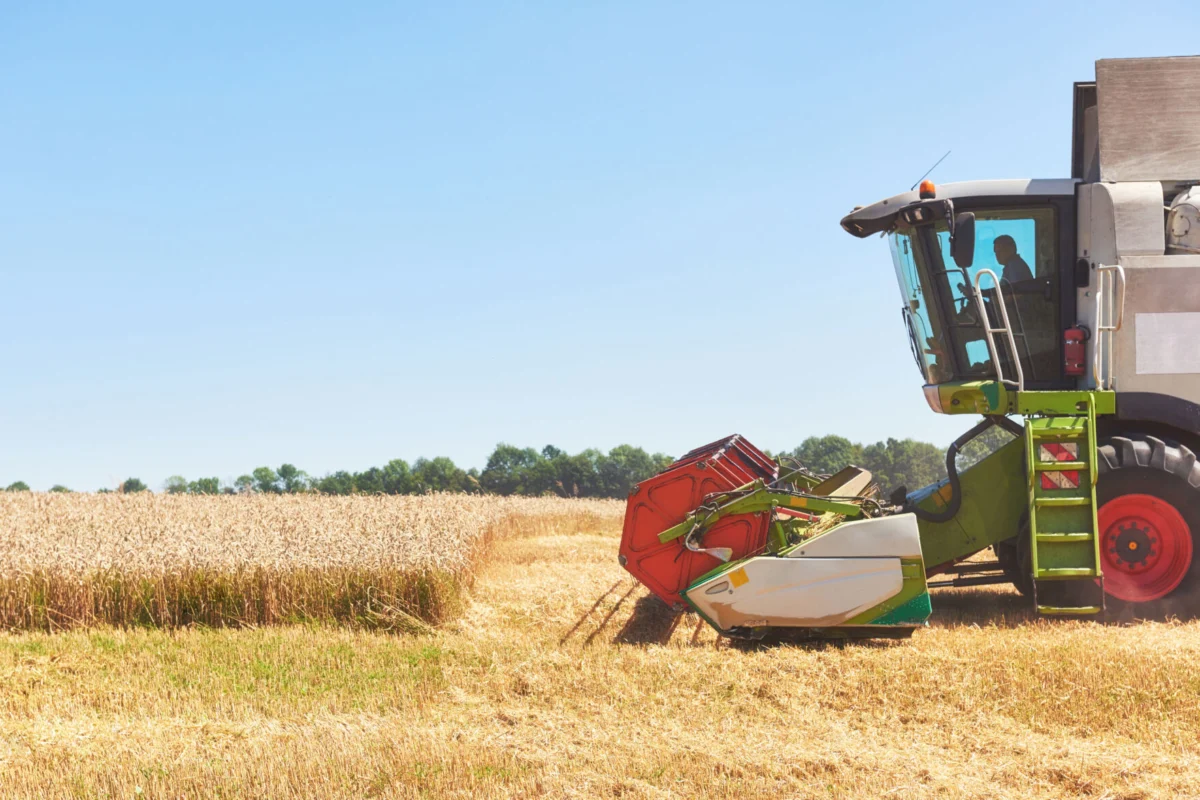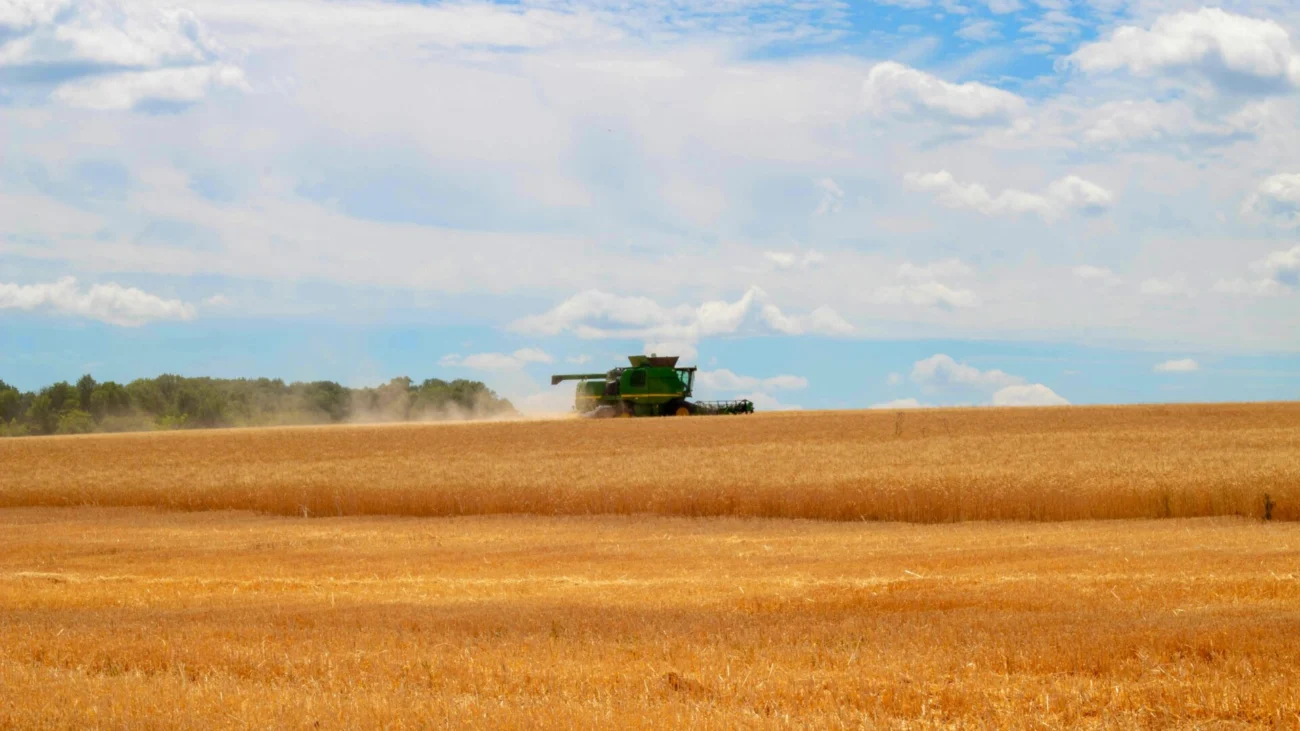

Ukraine’s agricultural sector has long been one of its most important assets, shaping both its economic trajectory and its position in global food systems. Before the full-scale invasion, it was among the fastest-growing parts of the economy, expanding at 5-6 % annually, contributing 10.9 % of the country’s GDP, and accounting for 17 % of employment in 2021.
Beyond its domestic significance, Ukraine has also been a major force in global agricultural markets, supplying food commodities that, pre-war, reached an estimated 400 million people worldwide.
Despite the severe disruptions of war, the sector has demonstrated striking resilience: in 2024 it contributed around 14 % of GDP and approximately 60 % of exports.
Yet this resilience shouldn’t obscure the scale of the shock. According to the latest Rapid Damage and Needs Assessment, direct damage to agriculture has reached USD 12.1 billion, while total economic losses stand at approximately USD 78 billion. Reconstruction needs are estimated at USD 55.3 billion over the next decade – around 10 % of Ukraine’s overall recovery bill of USD 588 billion.
These figures reflect destroyed machinery, mined farmland, damaged storage and logistics infrastructure, disrupted exports and entire production systems. What makes Ukraine’s agricultural recovery particularly complex is that it’s not simply about rebuilding what was lost. As a new CEPS Task Force report concludes, it’s about transforming a sector by following a ‘building back better’ strategy.
Contaminated land
The first and most immediate constraint is the land itself. An estimated 132,076 km² of Ukrainian land, roughly around 23% of the total, and 14,000 km² of water, around 58 % of total water area, are at risk of contamination by mines and unexploded ordnance. The human toll is also significant – between 24 February 2022 and December 2025, landmines and other explosive ordnance caused 472 deaths and 1 188 injuries.
Without scaling up demining efforts, production cannot safely resume, investment cannot flow and even basic planning becomes impossible. Land clearance is thus not just humanitarian – it’s the foundation which all other recovery efforts depend on. Delays cascade across the entire reconstruction process, constraining access to finance, slowing infrastructure reconstruction, and limiting the adoption of new technologies.
Access to finance
Unlike large agricultural companies, small producers, had more limited access to finance even before the full-scale war and. Now, they suffer more from weaker integration into supply chains and are more disproportionately affected by regulatory and financial constraints than larger firms. Without improving their access to low-cost, long-term finance, Ukraine’s agricultural recovery will remain constrained.
For all enterprises, the combination of wartime risks, weak collateral frameworks, policy unpredictability and uncertain fiscal support schemes negatively impact profitability and erode investor confidence. Without wartime insurance and security guarantees, inward investments and private funding could remain limited for both immediate reconstruction needs as well as longer-term modernisation efforts.
Bridging digital divide through accelerated digital transformation
Digitalisation, precision agriculture and AI-driven tools can also boost productivity, resource efficiency and resilience to climate shocks. Ukraine has already shown its adaptability by repurposing agricultural technologies for wartime logistics and coordination. However, access to these technologies remains uneven, with large agribusinesses far better positioned than smaller farms.
SMEs are vulnerable to digital security risks, partly due to continued reliance on Russian-origin software amid persistent cyberattacks linked to Russian and suspected Belarusian actors. The growing use of imported smart agricultural machinery also raises concerns over transferring sensitive farm and production data to foreign manufacturers and external platforms.
The digital transformation of Ukraine’s agricultural sector will depend on closing the digital divide, strengthening EU-aligned data governance and cybersecurity, and developing a national agricultural data space aligned with the EU’s emerging Common Agricultural Data Space.
Rebuilding infrastructure
The costs of rebuilding Ukraine’s infrastructure will be approximately USD 186.9 billion over the next decade. In the agricultural sector, the destruction and disruption of critical infrastructure have created cascading operational constraints, ranging from unreliable energy supply to damaged transport networks and the degradation of water and sanitation systems.
Ukraine’s agricultural exports depend on three parallel transport corridors – maritime routes, land-based connections and the Danube contingency system. However, all three remain exposed to persistent vulnerabilities, including rail disruptions, border processing bottlenecks and ongoing insurance constraints that limit private shipping and investment. And even after repairing infrastructure, there’s no guarantee that it won’t be destroyed again due to continued attacks from Russia and insufficient air-defence coverage.
Maintaining diversified trade routes, strengthening air defences around critical infrastructure and expanding war-risk insurance and trade facilitation measures will be essential for ensuring stable agricultural exports.
Ukraine’s role in European and global food security
Through solidarity lanes, autonomous trade measures and the revised DCFTA, the EU has remained a prominent trading partner for Ukraine. While certain segments – notably grains – have generated competitive pressures in specific EU markets, especially in bordering countries, these tensions are geographically and sectorally concentrated.
Ukraine’s agri-food sector remains largely complementary to the EU’s. The EU’s agriculture is more focused on higher value-added products, while Ukraine specialises in commodities and intermediate inputs such as grains, oilseeds and feedstocks. This is strategically relevant given the EU’s reliance on imported protein crops and feed from third countries such as Brazil, Argentina and the US. Ukraine could help reduce these dependencies and strengthen EU supply security and strategic autonomy.
Ukraine’s fertilizer production is also important due to recent energy and price shocks that have exposed the EU’s vulnerability to global supply disruptions. Beyond primary production, Ukraine’s emerging strengths in agri-tech, biotech and food-tech could help boost the EU’s innovation-driven agricultural resilience, especially after it accedes to the Union.
Ukraine’s agricultural model is inherently global, with strong exports to Asia, the Middle East and Africa. That’s why Ukraine’s integration into the EU’s Single Market shouldn’t be seen as narrowing Ukraine’s economic geography but rather making it more competitive globally. Although aligning with EU standards – across food safety, environmental sustainability, and production practices – will raise costs, it will also improve quality, expand market access and strengthen long-term competitiveness.
The stakes extend far beyond Ukraine
Bringing all the above dimensions together, the ‘from mines to markets’ approach underscores that recovery must be treated as a series of interconnected steps.
In a world of growing geopolitical fragmentation, climate change and rising food insecurity, Ukraine’s capacity to both restore and transform its agricultural sector will have far-reaching implications – shaping not only its own economic future but also the resilience of food systems in the EU and worldwide.
To read the full report that this commentary is based on, please click here.