
There isn’t one China, but de facto two, and both are now very different countries, with some common cultural traits from a shared distant past. Alas, the current One China policy, followed by the EU and the US, prevents the two – the People’s Republic of China and the Republic of China (commonly known as Taiwan) – from being officially distinguished from each other.
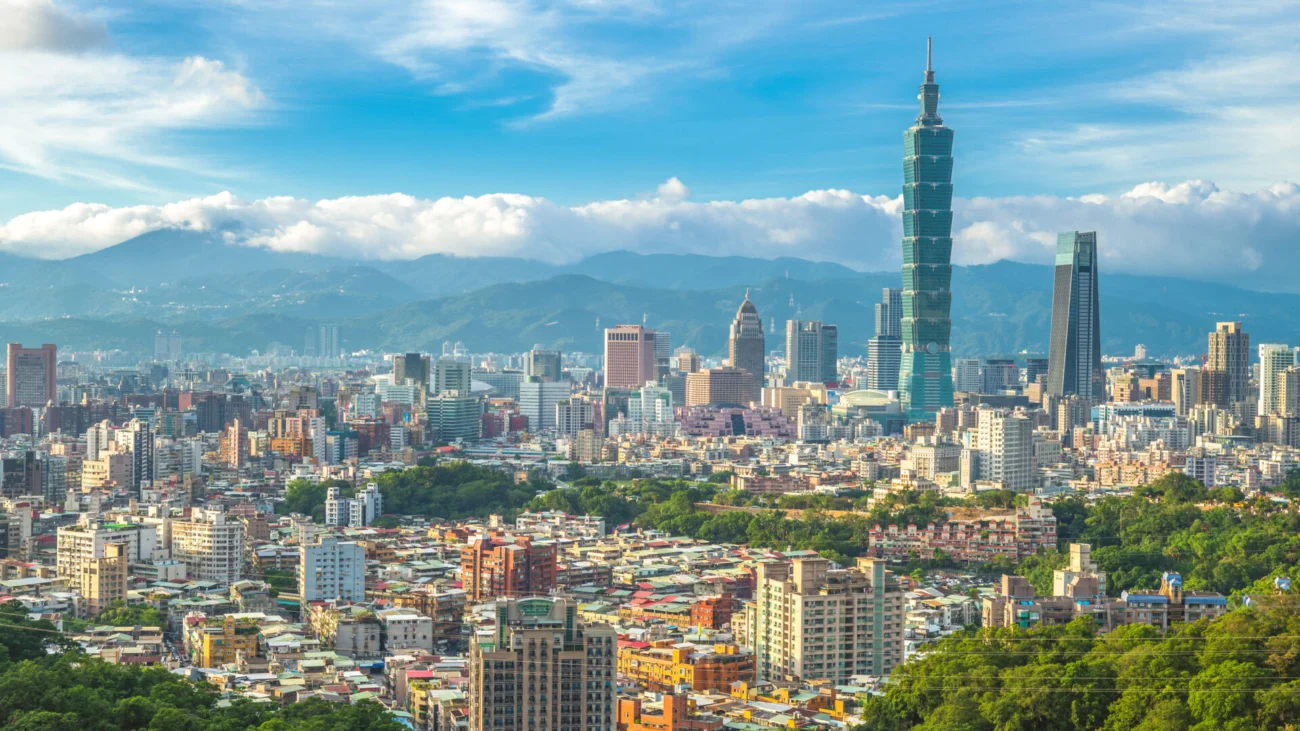
Yet Taiwan has become the world’s 21st largest economy, thus almost a G20 country. It provides an excellent example to the EU of a country that has a highly successful industrial policy and economic security strategy, whilst still being a vibrant democracy. Due to a breakdown of trust, Taiwan derisked from China and watches the EU’s China policies with a sense of sadness.
The Asia-Pacific is a strategic region for the EU. It hosts nine out of the world’s 10 largest chip makers, which manufacture up to 90 % of the most important mainframe and consumer electronic products. But it’s also a region that’s standing up to tight competition and pressure from mainland China. A conflict in the region could be much worse for the global economy than what’s happening now in the Strait of Hormuz. Taiwan, for example, manufactures over 60 % of the world’s semiconductors and 90 % of the most advanced chips.
Taiwan has very strong economic and public finance credentials. It’s a USD 1 trillion economy and has almost joined the club of 20 richest countries. It’s expecting economic growth of 10.3 % this year and has enviable low public debt (less than 30 %) and low inflation (1.8%). Taiwan has also successfully derisked from China. At its peak in 2010, 82 % of its outbound investment went to China. Today, it’s only 3.8 %.
Taiwan is thus an economic powerhouse, not only due to being the home of the largest contract-manufacturing chip producer, but it also hosts most of the world’s AI server manufacturers and many top-end SMEs, providing an integrated supply chain for electronics, from chip design all the way through to packaging. From a country of fishermen and farmers 70 years ago, it has invested heavily in education and research and innovation and scaled up successfully. Today, its GDP per head stands at USD 90,233 per person (PPP, current international dollars) or 11th place globally.
It shouldn’t all be about China
The EU and the US apply the One China policy in essence for diplomatic reasons, but also economically to keep the markets open. While keeping dialogue channels open with China, the EU should invest more in developing specific mechanisms to maximise its partnerships with other Asian tech middle powers – and not shy away from including Taiwan amongst them.
An autocratic mainland China, which has strongly supported Russia in its war against Ukraine and pursued aggressive trade policies should make the Western world reconsider. There’s no reason to overly pander to China, as it has more and more become a systemic rival to the EU.
Many Europeans view China as an investment partner, and by doing so, Europe’s increases its dependency. China weaponises these dependencies, and at the same time keeps its currency artificially undervalued by keeping its capital account firmly closed.
With the deteriorating EU-China relationship, the enormous trade deficit due to the exploitation of the EU’s markets, and China’s incapacity to stimulate domestic demand, the EU could give a warning shot by pragmatically bending its political line on the One China policy.
The current limits of cooperation
Imposed informal channels prevent Taiwan from exploiting partnerships with the EU and forces it to focus on non-political engagement. A large number of economic actors on both sides cannot easily work together, thus making it impossible to realise the full potential of the EU-Taiwan digital relationship.
As a recent CEPS In-Depth Analysis report outlines, as soon as any EU programme or instrument specifies ‘countries’ as eligible participants, it effectively excludes Taiwan from Horizon Europe association, digital trade agreements and most multilateral standard-setting bodies, which is a pity as the EU can – and should – learn so much from Taiwan.
Alas, cooperation currently occurs through a range of lower-profile channels that together constitute a substantive, yet architecturally fragmented, relationship. The lack of structured EU-level exchanges on cyber and economic security is a major gap given both Taiwan’s exposure and expertise. Meanwhile, Taiwan views the EU’s standard-setting capacity as a genuine strength but the EU giving a formal GDPR adequacy decision regarding Taiwan would raise political sensitivities. Taiwan is also finalising an AI risk taxonomy framework, inspired by the EU’s rules, but once again, an adequacy ruling would be political dynamite.
Yet there’s no denying that Taiwan is a core part of the ‘IT triangle’ in East Asia (comprising Taiwan, South Korea and Japan), yet a political anomaly or anachronism prevents it from fully exploiting a close EU relationship. Independent engagement from individual Member States has fortunately advanced but without formal coordination across EU workstreams.
The world’s current political environment is an opportunity for the EU to upgrade its digital diplomacy in the Asia-Pacific, and to maximise gains in its partnerships with other Asian tech middle powers.
And that’s why the EU shouldn’t so easily shy away from trying to bend the One China policy a little, by making moves to include Taiwan amongst its growing partnerships in the region.