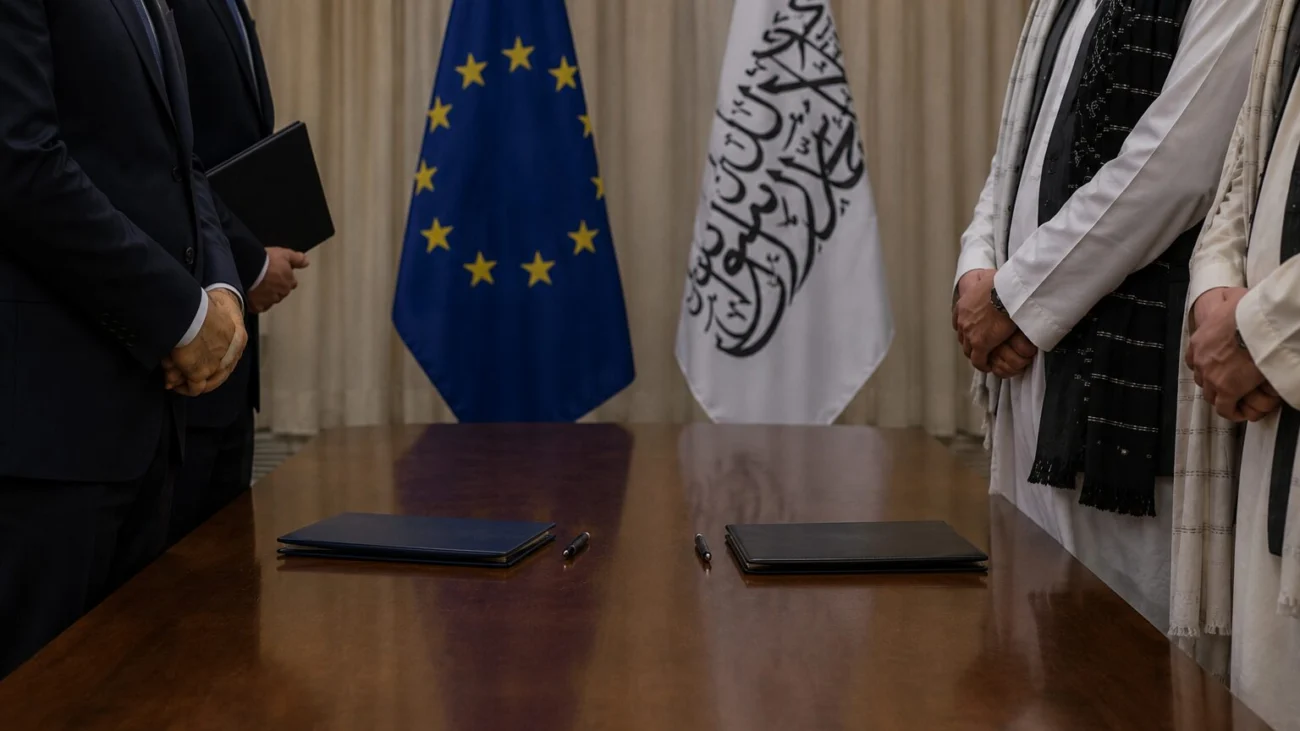

On 12 May 2026, the European Commission confirmed that it had sent a formal invitation to the Taliban in Kabul proposing a ‘technical-level meeting’.
This is a grave mistake. At best, Brussels is kowtowing to narrow political pressures; at worst, it’s normalising a regime of gender apartheid and terror – and all in exchange for a short-term ‘fix’ on migration that comes at the expense of core values and long-term security.
To understand how stark this is, recall that on 8 July 2025, the ICC issued arrest warrants for two Taliban leaders for the crime against humanity of gender-based persecution.
Less than a year later, the EU is granting exceptional visas to the government they lead.
Taliban barbarism vs. EU values
Afghanistan under the Taliban is the very definition of an abuser of women’s rights. UN experts describe Afghanistan today as ‘the most serious women’s rights crisis in the world’. There’s a term for what the Taliban’s governance of women amounts to, and it’s not a cultural difference or a religious interpretation.
The UN Special Rapporteur on human rights situation in Afghanistan, Amnesty International, Human Rights Watch, and the European Parliament have all recognised it as gender apartheid, an institutionalised system of segregation designed to erase women from public life. And it doesn’t stop there as LGBTIQ+ persons, ethnic and religious minorities, former officials, journalists, and activists continue to face arbitrary detention and violence. This means there’s no ‘safe’ returnee category to Taliban-controlled Afghanistan.
The ICC found reasonable grounds that the Taliban ordered the systematic deprivation of women’s rights to education, movement, freedom of expression, privacy, and family life deprivations documented across over 100 Taliban decrees issued since August 2021. Crucially, the Court also recognised that LGBTIQ+ persons and others deemed ‘non-conforming’ with the Taliban’s policies are also being persecuted, making these abuses potential crimes against humanity under international law.
The EU’s treaties are explicit that the EU is founded on human dignity, equality and human rights (TEU Articles 2-3), while Article 21 TEU requires that these values guide all EU external action, including foreign and migration policy. CIHRS has recently warned that subordinating EU foreign policy to migration-containment objectives ‘risk[s] placing the European Union in contradiction with its own legal framework.’
Commission spokesman Markus Lammert insists the talks ‘would not imply EU recognition’ of the Taliban. He’s technically right but it’s something far worse.
Recognition is a formal legal act. What Brussels is offering instead is something more insidious: normalisation. And normalisation doesn’t require a signed treaty. It happens incrementally, through granting visa, meeting rooms, and the quiet replacement of principle with transaction.
Green MEP Melissa Camara has already warned the Commission ‘not to cross this red line’, stating that hosting Taliban officials in Brussels would amount to ‘abandoning the values and rights on which the EU is founded.’
Return to sender?
The Commission frames this as a ‘technical’ conversation about migration management. But there’s nothing technical about returning human beings to a country where the returnees face ‘serious violations’ of their human rights, whether that be in Afghanistan or Syria.
The risks of this approach are illustrated by Germany’s charter flight of 28 Afghanistani citizens in August 2024, immediately publicised by the Taliban for propaganda purposes. Once a plane lands, there’s no credible oversight and reports indicate that returnees were detained and interrogated, with at least one later killed. If the EU proceeds with deportations, it would be doing so with full knowledge that many returnees will end up in torture cells or mass graves.
Under international law, the EU is bound by non-refoulement – in short, you cannot send anyone back to face persecution or torture (ECHR Article 3, UN Refugee Convention Article 33, EU Charter Article 4). In a recent case, the European Court of Human Rights stopped the deportation of an Afghanistan citizen on exactly these grounds.
For refugees (like this author), whose education, work and public engagement are a form of resistance to the Taliban’s ideology, Europe’s engagement with them feels less like pragmatic diplomacy than a gradual erosion of the very principles of protection, dignity and freedom as a basis of the European asylum system.
What could go wrong? (Hint: everything)
Beyond values and law, the strategic costs are immense. Multiple reports have documented the Taliban’s close ties with al-Qaeda and other jihadists networks. In 2023, EUISS warned that the Taliban ‘essentially act as [terrorist] protectors’, even issuing passports to ISIS and Haqqani militants. In effect, meeting Taliban envoys undercuts EU and global counter-terror efforts.
What makes this tactic truly self-defeating is that it serves the Taliban’s interests, not Europe’s. Numerous analysts note that the Taliban view these migration talks as a path to legitimacy, not cooperation.
In Brussels, some lawmakers are already sounding the alarm: as German MEP Hannah Neumann warns, every ‘coordinated return enhances Taliban power, helps normalise and legitimise the group on the international stage’.
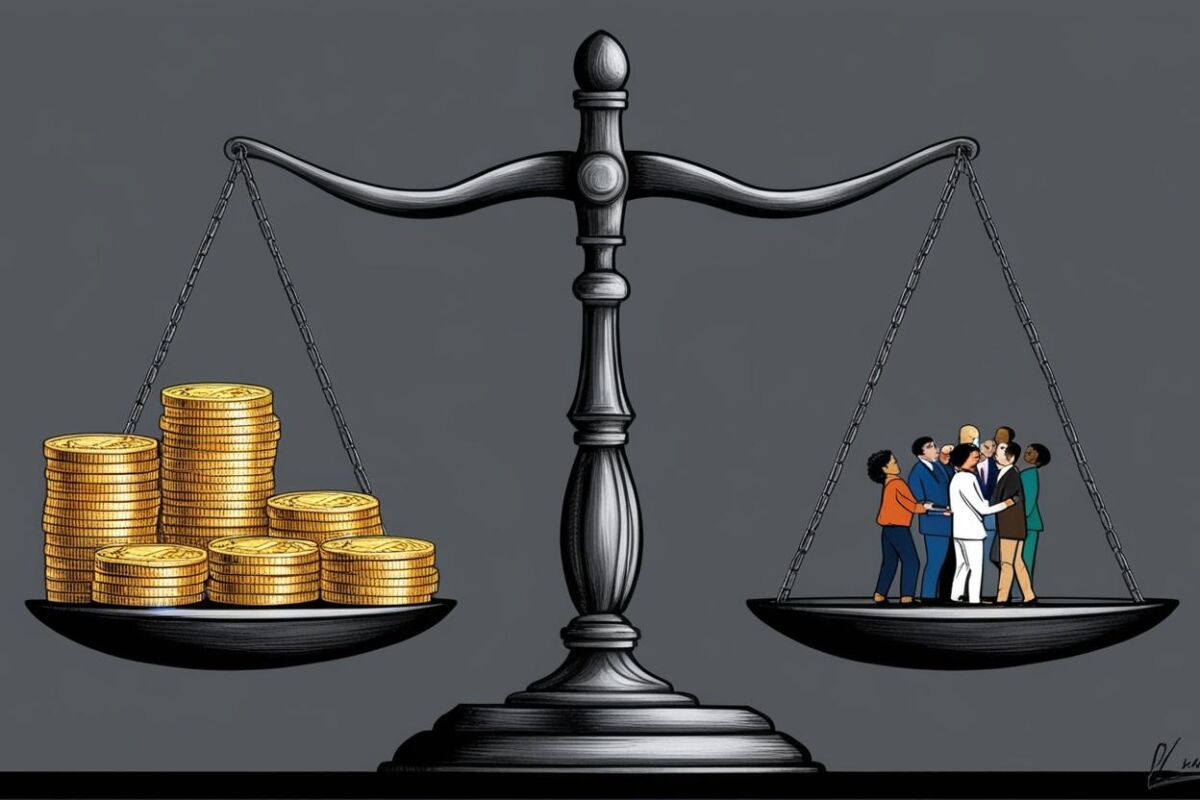
The EU’s far-right accommodation on migration is undermining its values as well as its instruments, its institutions and – ultimately – its global credibility. In the end, the Commission might secure a few more deportations but at the cost of Europe’s reputation as a defender of the rules-based order.
As UN experts reminded Europe in 2025: ‘States should be on the right side of history’, diplomacy with the Taliban is a hard step in the other direction.
The point of no return
The EU Charter imposes clear and binding limits that prohibits torture and mandates non-refoulement. Enabling returns by cooperating with the Taliban risks breaking these obligations and going against the EU’s binding human rights commitments. Afghanistan remains unsafe, regardless of attempts to recast it as ‘generally safe’.
Yes, refugee and migration flows from Afghanistan must be managed – but not by cutting deals with a terrorist regime.
The EU has better options. It should expand legal pathways, i.e. more resettlement places, family reunification schemes and humanitarian visas. Brussels should safeguard and promote the ICC process that’s already charged senior Taliban members for crimes against humanity. And above all, the EU must honour non-refoulement.
If human rights are reduced to political bargaining chips, the European project loses more than its credibility. For this author and others who fled to Europe seeking safety, seeing their persecutors welcomed to Brussels confirms that European values only hold until they become inconvenient.
And no amount of diplomatic language can soften this.
This commentary is part of a short series of commentaries to mark European Diversity Month, which will be published over the course of May.