
The European Commission marked World Press Freedom Day on 3 May, promising its ‘unwavering support’. But this isn’t enough. The latest MFRR annual report shows that attacks against journalists have been on the rise both in EU Member States and candidate countries, while many scored worse on the 2026 RSF press freedom index than before.
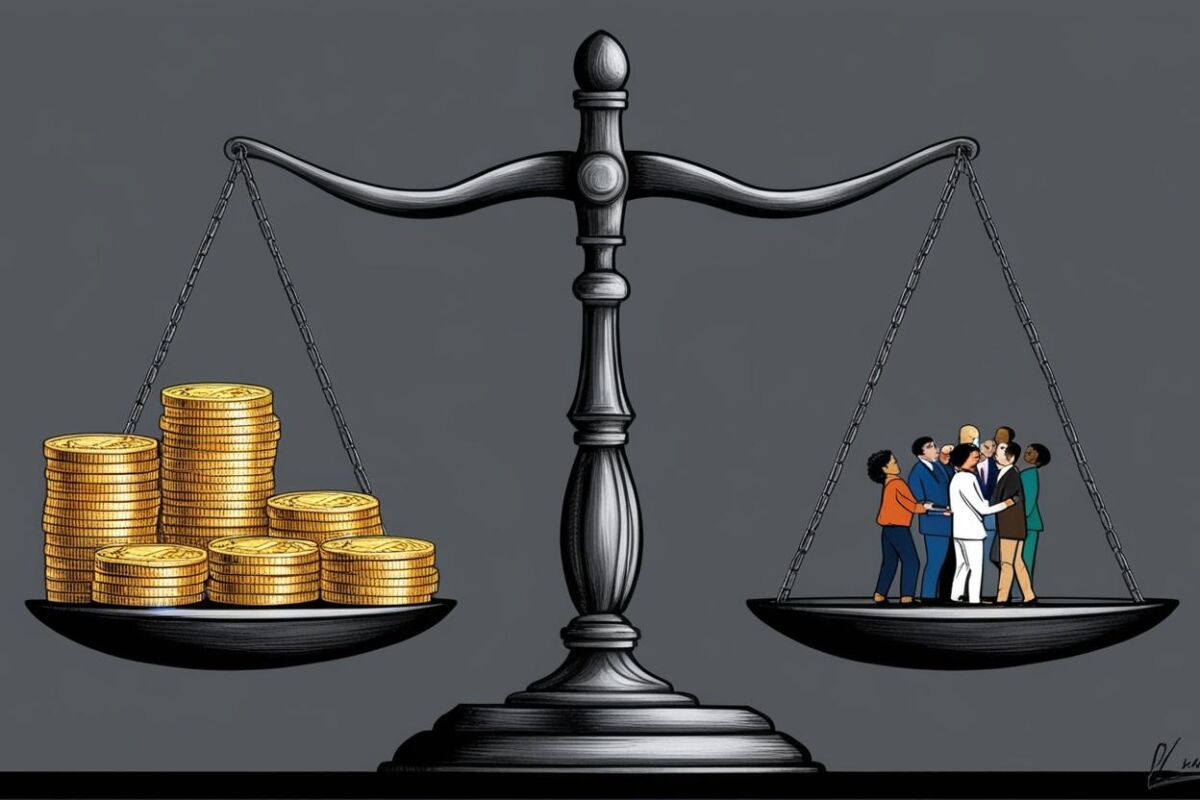
Among several issues threatening media freedom and pluralism, one that’s rarely talked about is media ownership concentration, which allows wealthy individuals to control a wide range of media outlets, often using them to push their own agenda.
This should ring alarm bells as the free press is an invaluable pillar of democracy. Protecting it is vital for upholding the rights-based community the EU purports to be. It has some tools it can already use – the question is whether there’s the political will to do so.
Gotta catch ‘em all
Across the EU, traditional news media have long been instrumentalised for political purposes. Silvio Berlusconi was a pioneer. His decades-long media dominance blurred the lines between media and political power and continues to cast a long shadow. It inspired the likes of Viktor Orbán, whose allies purchased many Hungarian outlets, prolonging his time in power. In Slovakia, Robert Fico has attacked public broadcasters, while the country’s private media landscape is dominated by a small group of companies.
In the US, one of the richest men alive – Larry Ellison – owns CBS (Paramount) and wants to further dominate the media by acquiring CNN (Warner Bros-Discovery).
The same pattern exists in France, where most outlets are at the mercy of a handful of powerful men. Just like in the US, media outlets – and those controlling them – can decisively shape the upcoming presidential elections.
One high-profile example is far-right industrialist Vincent Bolloré. He’s behind many media companies and owns one of France’s most watched info channels, which has become a stronghold of far-right voices.
Bolloré’s method reflects Berlusconi and Ellison: purchase media, impose a reactionary and ultra-conservative line, purge dissenting voices and install like-minded friends.
The result is a dangerous threat to democracy. As ownership concentration increases, opinion plurality and diversity is severely limited. As most EU citizens still use traditional media to stay informed, the values being repeatedly shared on air create echo chambers. This pushes parts of the population to vote against their own interests whilst giving them the false impression that they’re making an informed and democratic decision.
When the interests of the few drive what the many consume, elections risk producing governments that will serve the interests of oligarchs, not those of the people. And the next place where this could happen is France, where Jordan Bardella’s National Rally is being promoted by outlets controlled by the wealthiest.
A slippery slope
Regarding market plurality, the whole EU isn’t doing well. The Civil Liberties Union for Europe warns that media ownership concentration is high and worsening across Member States. While the EU has taken steps to protect media freedom, it needs to investigate gatekeeping media empires and enact rules to prevent massive conglomerates from forming.
In her 2025 State of the Union address, Ursula von der Leyen spoke of the commitment to protect media independence, notably through the launch of a new Media Resilience Programme supporting independent journalism and media literacy. Additionally, the next MFF could feature the new AgoraEU programme: its MEDIA+ will aim to uphold diversity and support free and independent journalism.
These are all steps in the right direction, but they don’t address the problem caused by growing ownership concentration.
The elephant pushed out of the room
The 2024 European Media Freedom Act (EMFA) shows that the EU considers free media a pillar of democracy. But when it comes to private ownership, and thus possible interference, it limits itself to transparency. The EU’s scope to act is of course limited, as media ownership and plurality rules are strictly national competencies. Yet it shouldn’t just give up. It should pressure Member States – unlikely to cede competence willingly – to enforce robust frameworks guaranteeing diversity and plurality across the news media landscape by limiting concentration.
The Euromedia Ownership Monitor (EurOMo), an EU-funded project delivering data in the spirit of the EMFA’s transparency rules, is a good step. Yet the valuable insights it’s produced has had little policy uptake. For example, EurOMo clearly labels Bolloré’s control over French media as worrying, but it remains unclear how the EU would address it. Their findings should be used for concrete risks assessments and ultimately inform targeted policy action.
Worryingly, the Commission has argued that some measures to safeguard media pluralism, like limiting ownership, would constrict the freedom of the media services market.
The irony shouldn’t be lost on anyone: concentration is a threat to the market. This is made clear in Article 102 TEU, which – though conceptualised for large economic actors – prohibits the abuse of dominance.
When media ownership concentration leads to abuse of dominance and distorts public debate, this provision’s principle in competition law should be considered as the basis for intervention.
Simultaneously, the Commission should be strict about enforcing the EMFA, especially its Article 22 on transparency and mapping media concentration and operationalise EurOMo’s findings.
If a situation of dangerous media concentration is identified, the EU should act by using antitrust laws in the media realm or even employing a similar regulatory logic like the Digital Markets Act, which takes concentration in the market for granted. The DMA’s regulatory logic could be applied to traditional media by inserting ‘gatekeepers’ into the EMFA framework, setting a series of obligations to the largest conglomerates.
The EU’s efforts for media ownership transparency are encouraging… but still not enough. While editorial independence remains a national competence, this isn’t an excuse to remain idle. Through budgetary conditionality or infringement proceedings, the Commission must step up to enforce the EMFA. If the free market is at risk anyway, why not act to also protect democracy and the right to accurate information?
Of course, things aren’t so simple. The EU’s inaction likely reflects both a structural conflict as well as fear: media conglomerates have every opportunity to smear the EU in their coverage, while national governments are just as reluctant to either subject themselves to the same ire or lose the benefits provided by sympathetic outlets’ coverage.
It all eventually comes down to what the guardians of European democracy see as more important – upholding media pluralism or private individuals’ right to build media empires to push their own agenda?