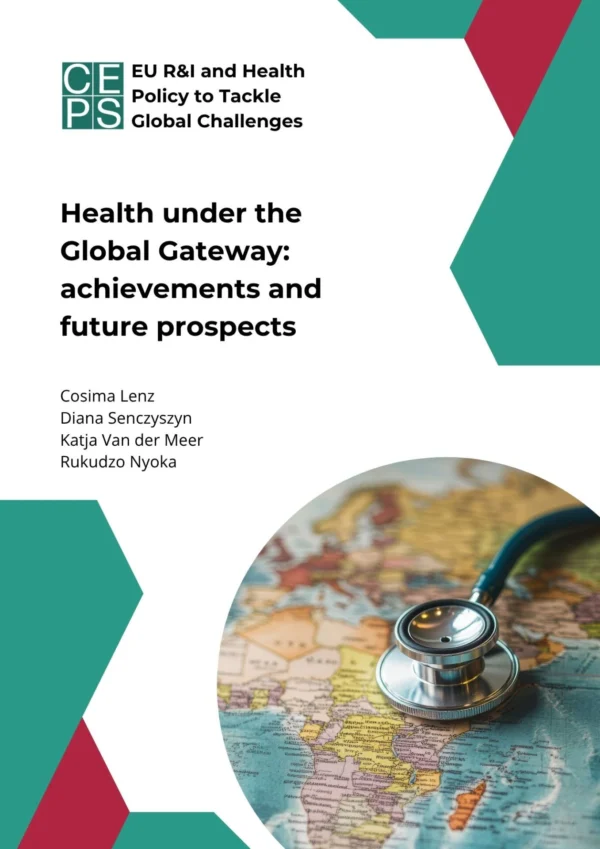


The EU has increasingly positioned global health as a strategic component of its external action through the EU Global Health Strategy and the Global Gateway initiative. While health is formally one of the Global Gateway’s five priority sectors, it remains a relatively small part of the portfolio, accounting for less than 10 % of flagship projects. This gap between ambition and implementation raises questions about whether the Global Gateway is delivering on its health objectives and the commitments set out in the EU Global Health Strategy.
This paper examines the health dimension of the Global Gateway by analysing flagship projects between 2023-26. It finds a strong focus on infrastructure investments, particularly water and sanitation and pharmaceutical manufacturing, with less emphasis on health systems strengthening and primary healthcare. Investments are also concentrated in sub-Saharan Africa and Latin America.
The analysis also explores how health objectives are operationalised through Team Europe Initiatives and the Global Health Resilience Initiative. While some programmes, particularly those supporting local manufacturing of medical countermeasures, demonstrate strong political commitment and resource mobilisation, implementation across the portfolio remains uneven. Limited transparency on financing, governance arrangements and results further constrains accountability and learning.
Amid declining health aid, rising geopolitical competition, and growing emphasis on resilience, the paper finds that health should be elevated as a cross-cutting pillar of the Global Gateway. This will require stronger links between investment, research, diplomacy and partner-country priorities, alongside improved coordination, accountability and anchored in country ownership.