
Unless a young European chooses to enlist in the armed forces or works in a national security institution or industry, there might not be obvious ways to contribute personally to European defence. However, this perception is only accurate if security is seen as a public good delivered exclusively by the state – as is the case of defending external borders with military kit.
Such a narrow view underestimates the type of threats we face today and the essential role individuals, neighbourhoods and society plays in responding to them.
That’s why security must also be considered a personal concern. In short, we all need to be involved.
Unprepared is overexposed…
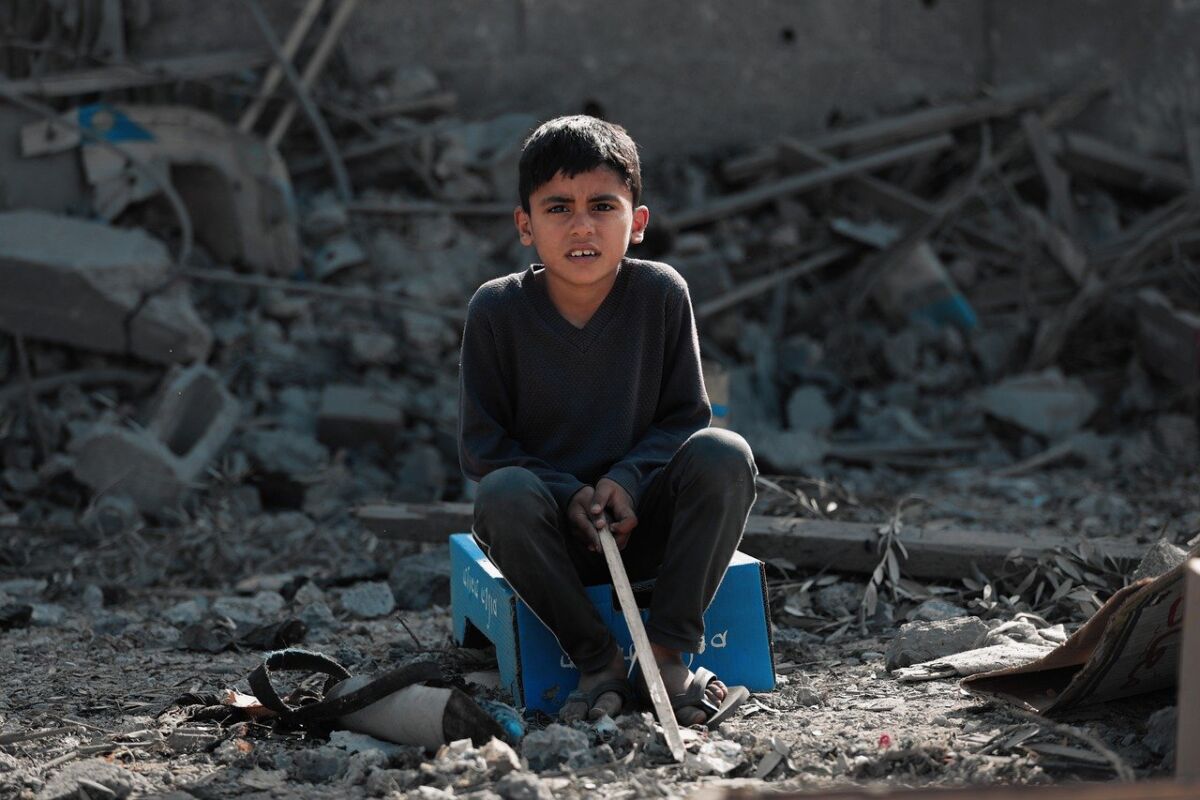
First, crisis preparedness begins at home. While it matters for a state’s response whether a power or water outage is caused by a cyber-attack or from sabotage, unanticipated weather conditions or simple human error, the immediate concern for citizens is the same: do I have sufficient supplies, batteries or alternative sources of heating at home to sustain my family for the first hours or days of disruption? And could I manage for longer if shops were closed or deliveries interrupted?
A special Eurobarometer survey conducted in early 2024 found that only 48 % of Europeans say they feel relatively well informed about disaster risks. Between the highest- and lowest-performing countries there are wide disparities, however: 90 % of Swedes, 80 % of Slovenians and 79 % of Finns report feeling well-informed, compared with just 28 % in Portugal, 31 % in Hungary and 33 % in Italy.
Across the EU27, preparedness levels remain modest. For no single category of emergency supplies does the average exceed 50 %: 47 % of households have flashlights or candles, 36 % keep a home pharmacy for emergencies, 29 % keep a stock of food, 20 % store emergency water supplies, 20 % have a battery-powered radio, and only 18 % have agreed a family communication plan in the event of a crisis.
Preparedness also varies significantly between regions, with northern and western European countries generally reporting higher levels than eastern and parts of southern Europe. Demographic differences are also visible, with older respondents more likely to have emergency measures in place.
No country can ever achieve 100 % preparedness and short of a total societal collapse, that level of readiness isn’t necessary, nor realistic. Yet moving towards greater self-reliance is urgent. To be able to cope for 72 hours during an emergency is also part of EU official guidelines, as drawn up as part of its Preparedness Union Strategy, launched in March 2025. This followed the publication of ex-Finnish President Sauli Niinistö’s report on civilian and military preparedness.
Looking to the Nordics and Baltics
The Nordic and Baltic countries offer one model for bridging the gap between the state and individuals – voluntary home guards, whose members augment the national defence forces and first responders but also act as community pillars. These cross-sector networks help to build societal cohesion. At the most basic level, they reassure everyone that in a crisis there are people with the skills and capacity to help.
Often, they can become a driving force for raising public awareness. In October 2025, Estonia’s Defence League launched basic drone training for civilians and reached over 300 people within two months, with nearly 3 000 more on the waiting list and growing. The programme offers a simple introduction to drone operation, encourages participants to think through countermeasures in the event of an attack, and incentivises further training.
The ‘Be ready’ app developed by the Estonian Women’s Voluntary Defence Organisation includes practical guidelines and preparedness checklists. Similar brochures have been posted to all households by the rescue services. Both organisations also regularly conduct crisis preparedness training. Most importantly, these initiatives aim to encourage people to plan ahead and discuss these plans with their families.
Similar volunteer-based civil protection networks exist in other EU Member States as well, but what the Nordic and Baltic approaches provide is a system that connects them with a territorial defence force. Certainly, the need to acquire skills to defend oneself is felt more keenly on Europe’s eastern flank, where the external threat is perceived as very real.
Nevertheless, across the EU we must be better prepared to deal with ‘the age of unpeace’ – a spectrum of hostile attacks that target civilian infrastructure, test institutional responsiveness, and seek to weaken societal cohesion and endurance. This would be well below the threshold of a conventional armed attack that might trigger a collective response yet exceeding the level of peacetime stability we’ve all grown accustomed to.
Towards a European model of civil resilience
It’s worth considering how existing organisations can be developed for improving awareness of the need for more robust civilian preparedness across society, not only among its most proactive segments. Western European countries that have traditionally maintained strict civil-military separation laws can look to the total defence model for inspiration.
The EU could provide support and help with coordination. Some challenges vary, from Finland to Portugal, due to differences in risk perception and the natural environment. Other challenges, such as ensuring the continuity of essential services or mobilising citizens to take an active role, are quite similar. Sharing experiences across countries can help all Member States learn and adapt more effectively.
National Defence Courses, programmes used in both Estonia and Finland that bring together the military, politicians, state and local officials, business executives, educators, cultural figures, and community leaders for lectures and practical workshops can be initiated elsewhere. These initiatives help reduce the mental distance between the general population and the work that the defence forces undertake to keep us all safe.
Above all, citizens themselves should believe that ensuring our security is everybody’s concern, and that it’s not just the responsibility of state institutions and their personnel. The fewer resources the state must spare for the young and healthy, the more they have for the truly vulnerable groups.
And the better we know our neighbours on the street or fellow compatriots, even those with different backgrounds or worldviews, the stronger our social cohesion becomes. And the stronger we’ll be as nations.
For the fourth year in a row, CEPS is once again proud to mark International Women’s Day on 8 March with another short series of Expert Commentaries to showcase the insights and expertise of some of our most talented female researchers.