
Last Sunday marked International Women’s Day (IWD) – a moment to commemorate both the struggles and the progress made for gender equality and women’s rights internationally. Yet today, in Europe and beyond, many of these hard-won gains are being reopened not as settled rights but as contested politics.
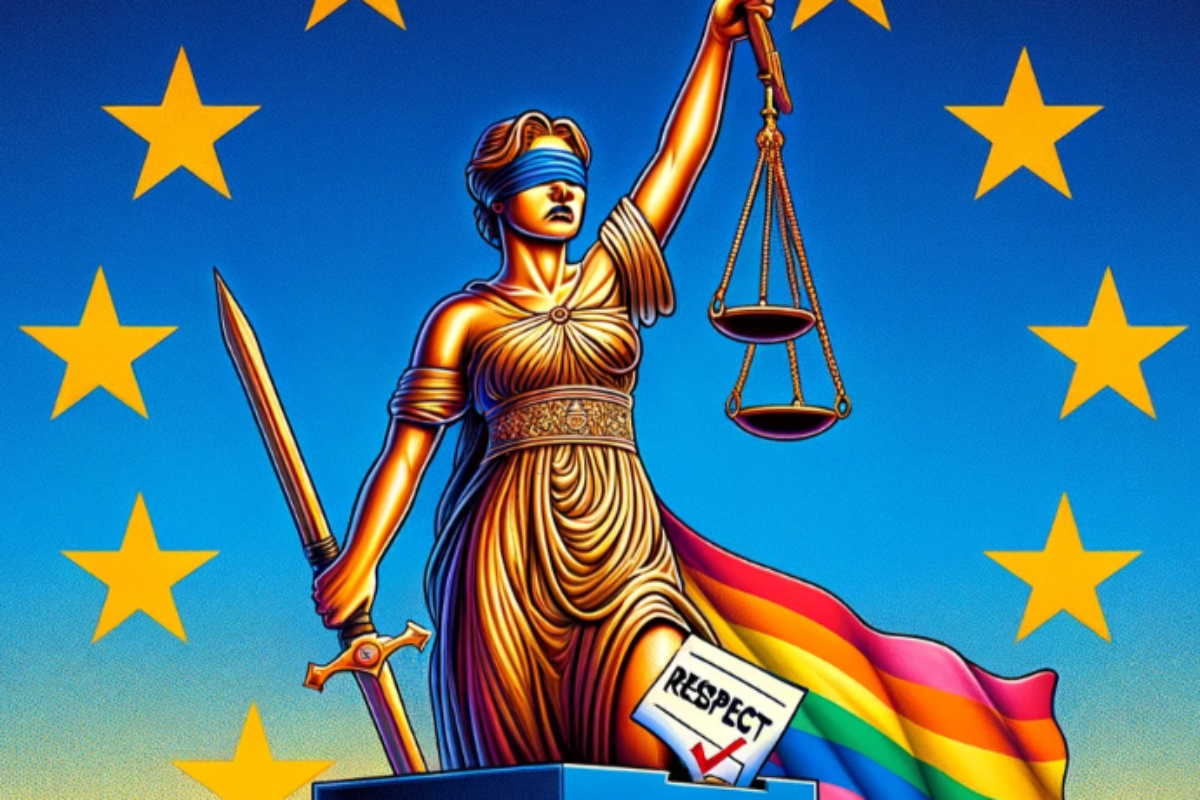
This rollback is visible in Poland’s stalled abortion reform, Latvia’s push to step back from the Istanbul Convention, as well as the ‘anti-LGBTQ+’ legislative surge under Donald Trump.
Turkey is also a telling example, where violence against women is increasingly framed as a matter of strengthening and protecting the family, while protections against such violence – from the Istanbul Convention to practical enforcement – have weakened. Turkey’s experience could be the canary in the coalmine for Europe.
In Turkey, the space for women’s rights and gender equality has grown noticeably narrower, with the country now ranked 106th in the 2025/26 Women, Peace and Security Index – which covers women’s inclusion, access to justice and security – placing it well below many countries in Central and Eastern Europe and Central Asia.
The rollback became especially visible in 2021, when Turkey withdrew from the Istanbul Convention. This Council of Europe treaty aims to tackle all forms of violence against women and girls, recognising such violence as systematic and gender based. It also sets binding obligations on prevention, victim protection and support, and prosecution, alongside the requirement for improved data collection and awareness raising.
Turkey was the first country to ratify the Convention in 2012 and it later became the first – and hopefully last – to withdraw, claiming the treaty had been ‘hijacked’ to normalise homosexuality and to undermine social and family values.
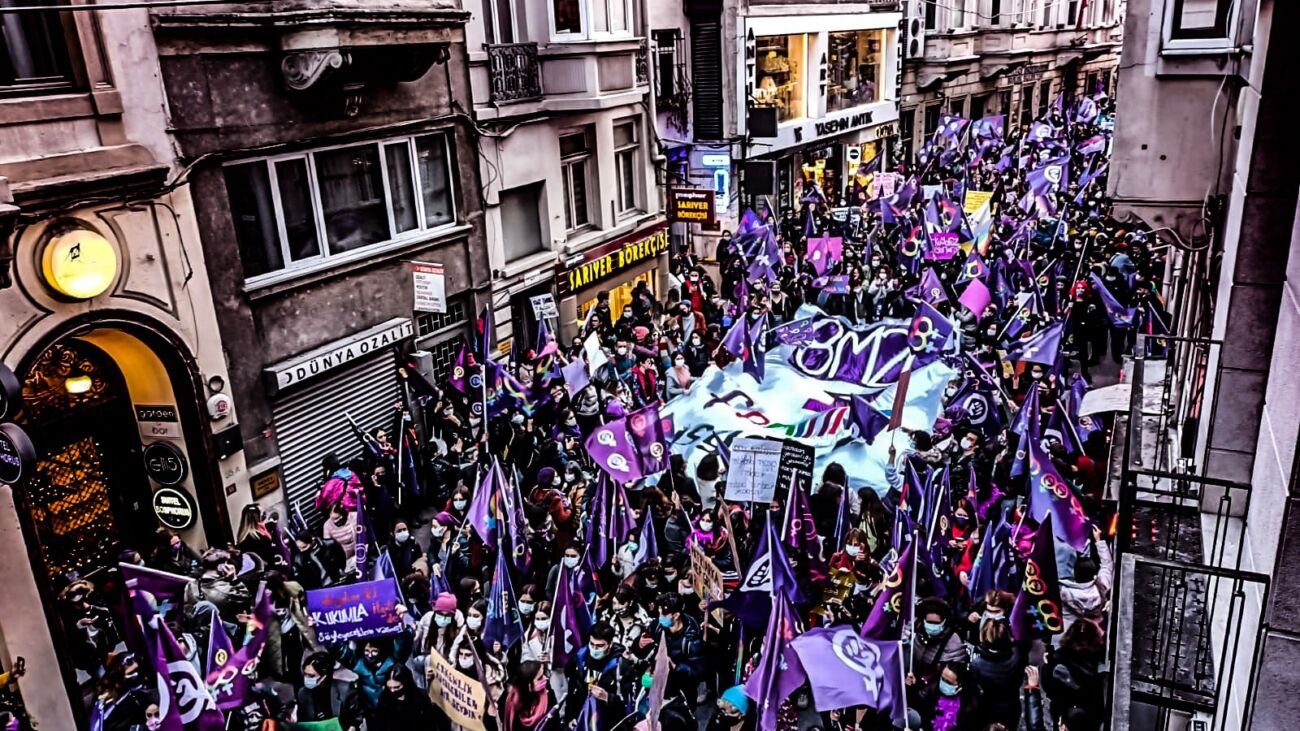
Public space hasn’t been spared either. Every 8 March, Istanbul’s Feminist Night March, organised since 2003, brings thousands of women together to protest violence, patriarchy, gender inequality and the state’s failure to uphold women’s rights. In recent years, however, the march has increasingly been met with restrictions, including bans, transport closures, police cordons and detentions.
These restrictions aren’t incidental and they’re not unique to Turkey – they show how anti-gender politics go hand in hand with shrinking democratic freedoms.
2025 as the Year of the Family?
The Turkish government declared 2025 as the ‘Year of the Family’, portraying the traditional family as the cornerstone of society, while concepts such as gender identity were framed as threats to the family and national values. This logic even reached the football pitch, where male players took it upon themselves to speak over women’s bodies and choices, promoting ‘natural childbirth’ as part of a Health Ministry campaign during a Super League match.
Yet when policy centres the family more than women’s rights, it becomes easier to obscure failures in protection and accountability. This is why the erosion of legal and institutional protections – including those linked to the Istanbul Convention framework – matters in practice, not only in principle.
According to the We Will Stop Femicides Platform (KCDP), at least 294 women were killed in 2025, with 61 % murdered in their homes and 69 % killed by a male (sometimes former) family member. The so-called Year of the Family also saw 297 suspicious deaths of women, the first time ever that suspicious deaths surpassed recorded femicides – despite official claims that there are no unsolved murders.
This indicates alarming structural shortcomings in investigation and accountability, including insufficient evidence collection and prematurely declaring cases as either suicides or accidents. Without reliable and comparable administrative data as evidence, the scale and patterns of abuse and violence remain blurred, limiting effective policy responses.
Filling institutional gaps
Equality exists on paper in civil and family law in Turkey, yet uneven implementation and weak enforcement persist, alongside legal gaps in addressing forms of gender-based violence such as stalking, forced marriage and digital violence. But the problem isn’t only within the justice system – it extends into education where gender equality and sexual education are absent from the curriculum, and into healthcare, where abortion is often nearly impossible to access despite being legal.
In parallel, multiple assessments, including recent Commission reporting on Turkey, underline persistent gaps in how public authorities collect, track and report of cases of violence against women and femicides, which in turn obscures institutional failures of the state itself. Taken together, these issues leave much to be desired when it comes to gender equality in practice.
In response, civil society has often stepped in where public institutions fall short. It has built parallel systems of documentation and support, even as civic space becomes increasingly constrained. Groups such as KCDP document and compile case-by-case data on femicides and suspicious deaths while initiatives like Anıt Sayaç (Monument Counter) serve as a digital memorial and database, created after official data requests went unanswered. Women’s assemblies and bar association offices provide free legal assistance and awareness-raising at the local level.
We see similar cases, with civil society taking action amid institutional inaction; in Poland the first ‘abortion point’ opened across the street from parliament on IWD and Ireland’s citizens’ assemblies contributed towards lifting the constitutional ban on abortion.
This is precisely where the EU can play a practical role – by helping sustain and strengthen the actors already filling these gaps. A key avenue would be to support civil society through funding and capacity-building, while also backing organisations that track implementation gaps against Istanbul Convention standards.
In Turkey’s case, this should go hand in hand with urging the government to move back towards alignment with – and ultimately renewed commitment to – the Convention. In practice, this would mean scaling what already exists; EU-Council of Europe programmes on women’s access to justice aimed at strengthening the capacity of NGOs, monitoring efforts on gender equality indicators led by CEİD, and the European Institute for Gender Equality’s upcoming regional cooperation to improve gender statistics and mainstreaming.
Turkey’s withdrawal from the Convention, the restrictions on feminist mobilisation and the rise in suspicious deaths are not an exception. Violations against gender equality and women’s rights don’t stop at national borders and are constantly reframed through cultural, family and political lenses.
Similar struggles are visible across Europe, where backlash against Istanbul and the very language of gender is cast as a threat to traditional family structures and national values. Without a gender perspective, cases appear isolated and disconnected, masking both systemic patriarchal violence and the institutional shortcomings behind them.
International Women’s Day therefore doesn’t reflect closure, but the persistence of a lot of unfinished work.
For the fourth year in a row, CEPS is once again proud to mark International Women’s Day on 8 March with another short series of Expert Commentaries to showcase the insights and expertise of some of our most talented female researchers.