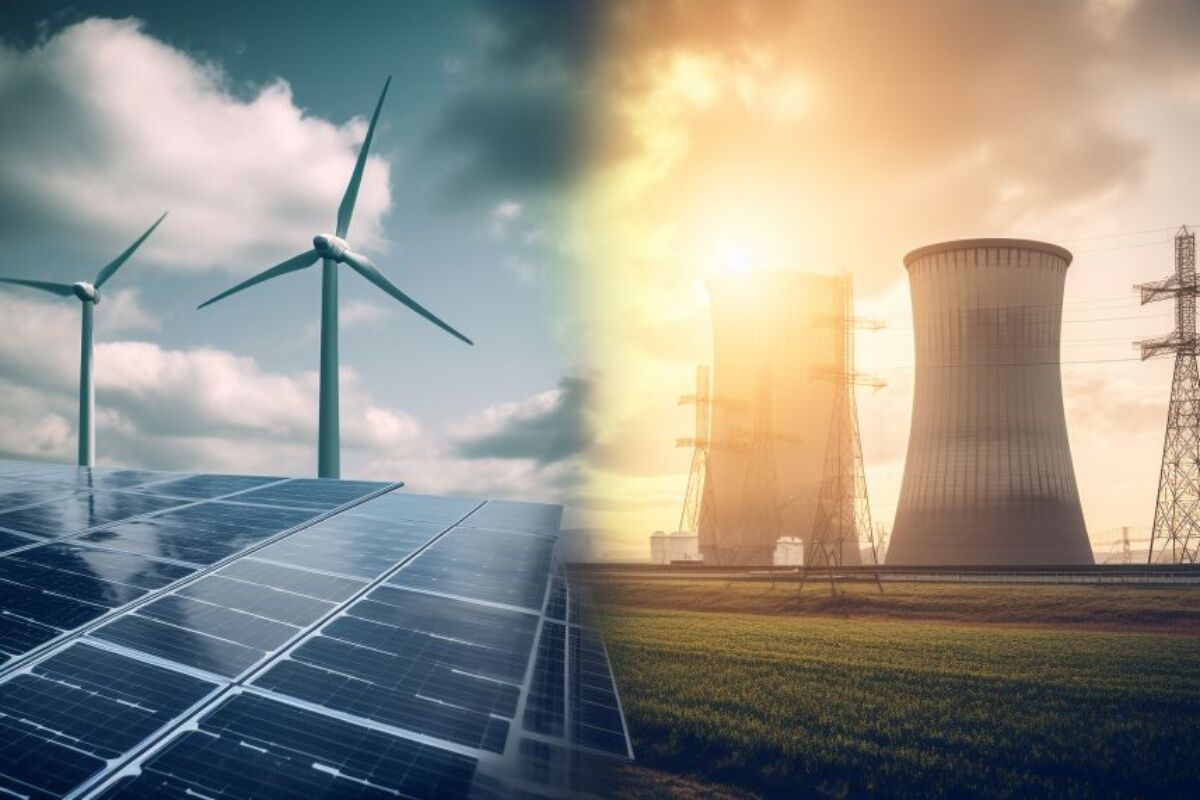

Massive end-use electrification and soaring power demand from the digital economy have pushed nuclear energy back onto the agenda. But talk of a ‘nuclear revival’ isn’t new. The mid-2000s ‘nuclear renaissance’ promised new reactor designs and rested on increasingly important emissions reductions policies and then-high gas prices. In Europe, it largely faltered, with delays and cost overruns denting confidence, and then Fukushima killed political appetite.
Yet unlike the mid-2000s, today’s case for nuclear rests on Europe’s competitiveness, which hinges on building a reliable, low-carbon system, while containing high energy prices, and the post-2022 drive for homegrown and secure energy. In the updated NECPs, more than 10 EU Member States are considering nuclear, either again or for the first time.
Finally, some pragmatism
Nuclear energy has long been deeply divisive in Europe. Once hailed as ‘too cheap to meter’ and as a hedge against the 1973-74 oil crisis, it later became entangled in the anti-nuclear movement in some countries and complex coalition politics in others.
Article 194 TFEU leaves energy mix choices to Member States, a principle the CJEU has repeatedly reaffirmed. Yet EU-wide policies touching on nuclear remain contested, ultimately affecting investor confidence and nuclear’s overall business case. In the previous 2019-24 cycle, disputes spilled over into the multiple areas, from the Taxonomy and nuclear-based hydrogen, to the NZIA and the electricity-market reform. EU funding and other financing has also been highly selective.
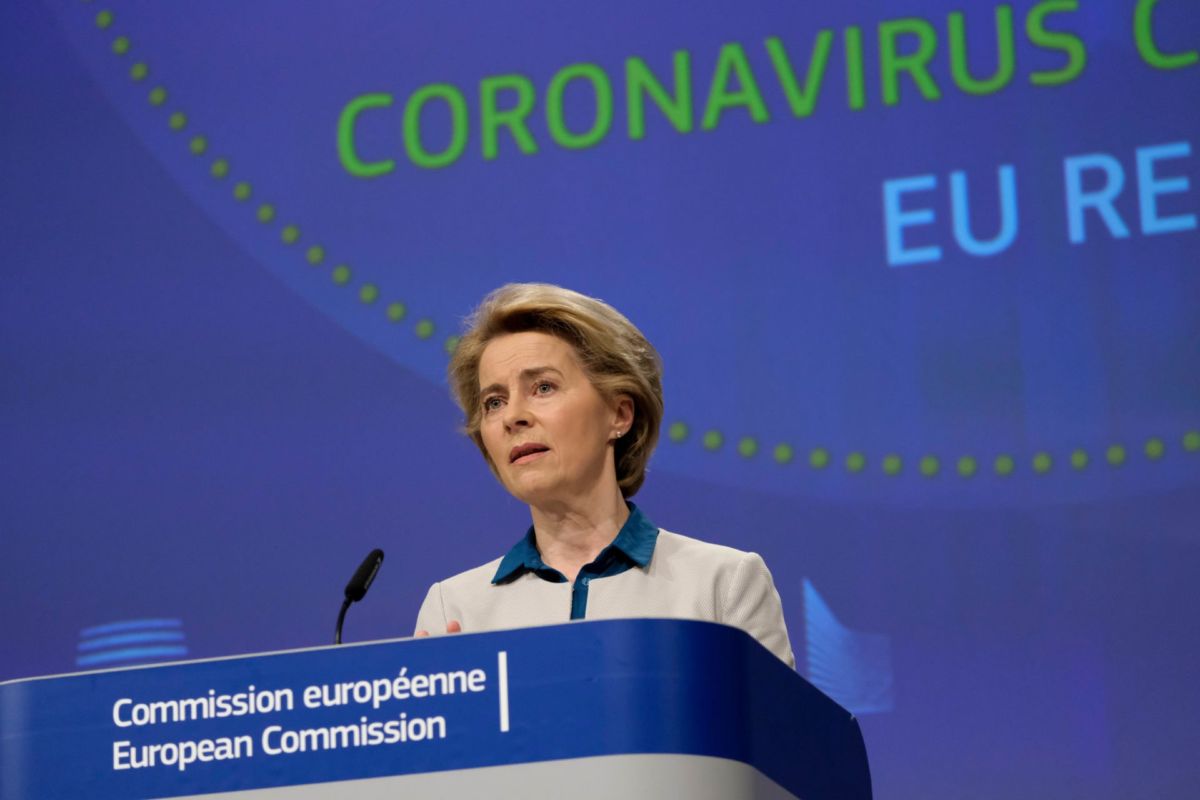
Recently, a more pragmatic tone seems to have taken hold. The 2024 Nuclear Energy Summit, the Franco-German nuclear rapprochement, more optimistic PINC projections and explicit references to nuclear as a baseload in President Ursula von der Leyen’s 2025 State of the Union address have all signalled a shift.
Is there space for nuclear?
It’s increasingly recognised that nuclear power will remain important as a dispatchable source of clean electricity. Even European Commission projections in 2020 and 2024 foresee stable capacity (though most already exist and aren’t new).
A decarbonised system will rely heavily on variable renewables. Yet this also requires deliberations on the best ways to manage system-wide costs and to ensure adequacy. When considering system-level costs, including rising redispatch and balancing costs, as well as associated grid expansion costs, nuclear can appear more competitive than headline comparisons suggest.
The challenges in deploying renewables and immature long-duration storage also reopen space for nuclear. As system transformation progresses, achieving a fully decarbonised, stable energy system isn’t as straightforward as was previously thought. This makes nuclear’s contributions – low-carbon firmness, inertia, stability – ever more relevant, explaining renewed interest among Member States. Integrating these contributions into the current market design remains a core policy challenge.
For those countries which choose to advance nuclear power, there’s also the question of nuclear generation’s long-term revenue. Highly capital-intensive, nuclear is conventionally designed for continuous, i.e. baseload operation. Some countries, including Finland, Sweden and Romania, still maintain this due to a mixture of reactor design restrictions and regulatory frameworks. As renewables run for more hours, nuclear is increasingly pushed to load-follow. While often technically feasible, as in France and pre-phase-out Germany, this does, however, erode revenues.
The 2022-24 electricity market reform introduced options for greater revenue predictability but left the fundamental problem of zero- or low-marginal-cost generation unresolved. Ongoing policy considerations about capacity and flexibility markets could offer some answers. Equally, cross-border cooperation that reflects – rather than suppresses – diversity, should be welcomed.
European nuclear remains slow… and costly
New nuclear projects remain expensive in Europe. Since the 1990s, only a few reactors have been built or are currently under construction – and almost all of them have suffered severe delays and cost overruns, with schedules often slipping by over a decade.
There are several possible reasons for this. Difficulties with new-generation European Pressurised Reactors (EPR) are hard to ignore, suggesting that they may not yet have achieved Nth-of-a-kind costs, and after several decades of stagnation, supply chains have eroded and there’s now a severe lack of skilled labour. This further balloons engineering, procurement, and construction risks and lead times. Then regulatory complexity also adds costs and causes delays. Public and safety sensitivities justify being cautious but the boundary with overall paralysis is thin, as highlighted by the recent UK Nuclear Task Force report.
Despite all their hurdles, all these projects were approved in the relatively benign economic conditions of the 2000s. Today, similar delays would be financially lethal for large, capital-intensive assets. Ultimately, the industry’s ability to reduce costs and delays will be one of the main conditions for defending nuclear with private investors.
While France’s EDF is likely to build mostly domestically, choices for large-scale nuclear are arguably limited to US Westinghouse, Korea’s KHNP and Canadian CANDU designs, which raises question around strategic autonomy. But their ability to deliver projects on time and within budget is what’s most important. As KHNP recently won the Czech tender – having previously delivered projects in the UAE on time and on budget, all eyes are now on whether they can replicate that success in Europe.
Financing remains the central bottleneck
We also can’t overlook that nuclear energy has been historically developed with significant public involvement. While Small Modular Reactors may eventually alter this dynamic, strong public backing – including funding – remains indispensable.
This doesn’t diminish the role of private investment. Strong political and policy support, including de-risking options such as state-backed guarantees, is essential for underpinning private investment and lowering financing costs. Private investors will only commit if Member States provide robust, transparent risk-sharing to kickstart deployment. EU funding and de-risking tools also matter, with the EIB’s cautious re-engagement being welcomed.
Today, perhaps only Sweden ticks off these conditions. Its newly adopted scheme – government loans, political guarantees and two-way contracts for difference – as well as Poland’s state aid case are useful case studies. The Commission’s relatively quick review of Poland’s case may also signal a more constructive approach to state aid approval cycles.
A future for nuclear yet
Although nuclear energy remains a political choice for Member States, a substantial number of them are increasingly turning to its system-level benefits, contribution to decarbonisation efforts and role as a core component of the energy system transformation. At EU level, pragmatism appears to be gaining ground, even as existing frameworks still fall short of fully leveraging nuclear’s strengths.
Ultimately, however, nuclear’s prospects hinge decisively on the industry’s ability to deliver projects on time and within budget, and – most crucially – on Member States’ willingness to provide sustained financial and political backing for such large investments.
With a renewed policy debate around nuclear energy in the EU, CEPS is assessing the role of nuclear power in Europe’s energy and industrial strategies, resulting in a study that will be published in Q1-2 2026. CEPS is also convening a closed-door roundtable on the main policy issues surrounding nuclear energy on 17 February 2026.