The Modernisation of EU Anti-Cartel Enforcement: Will the Commission Grasp the Opportunity?
This paper argues that the European Commission's Directorate General for Competition, under its new Competition Commissioner Joaquin Almunia, is now facing acute problems in its investigation and prosecution of cartels, which stem from the successful cartel busting era of Commissioner Kroes. The core argument is that the Commission's procedures emerged at a time when the aim was to consult extensively on the development of competition law, and not to prosecute and fine delinquent business entities. These antiquated procedures, which have not been substantially reformed since they came into force in March 1963, involve extensive documentary responses in which the Commission acts as investigator, prosecutor and judge and only allow the Commission to hand down half a dozen decisions condemning cartels per year.
London City University Professor Alan Riley argues for a comprehensive modernisation of the Commission's anti-cartel regime, stripping away the limitations on the application of the leniency programme; streamlining the contentious procedure to encourage a greater throughput of cases and reforming the sanctions regime to allow individual sanctions to ensure personal accountability for price-fixing by corporate executives.

| Attachment | Size | Hits | Last download |
|---|---|---|---|
| Modernisation Final e-version.pdf | 239.57 KB | 331 | 4 hours 58 min ago |
This paper argues that the European Commission's Directorate General for Competition, under its new Competition Commissioner Joaquin Almunia, is now facing acute problems in its investigation and prosecution of cartels, which stem from the successful cartel busting era of Commissioner Kroes. The core argument is that the Commission's procedures emerged at a time when the aim was to consult extensively on the development of competition law, and not to prosecute and fine delinquent business entities. These antiquated procedures, which have not been substantially reformed since they came into force in March 1963, involve extensive documentary responses in which the Commission acts as investigator, prosecutor and judge and only allow the Commission to hand down half a dozen decisions condemning cartels per year.
London City University Professor Alan Riley argues for a comprehensive modernisation of the Commission's anti-cartel regime, stripping away the limitations on the application of the leniency programme; streamlining the contentious procedure to encourage a greater throughput of cases and reforming the sanctions regime to allow individual sanctions to ensure personal accountability for price-fixing by corporate executives.

BOOK
[view] => Printed book ) [1] => Array ( [value] => [format] => [safe] => [view] => ) [2] => Array ( [value] => [format] => [safe] => [view] => ) ) [print_display] => 1 [print_display_comment] => 0 [print_display_urllist] => 1 [signup] => 0 [tags] => Array ( ) [uc_order_product_id] => [last_comment_timestamp] => 1262864301 [last_comment_name] => [comment_count] => 0 [taxonomy] => Array ( [taxonomy_term_4] => Array ( [title] => Regulatory Policy [href] => taxonomy/term/4 [attributes] => Array ( [rel] => tag [title] => ) ) [taxonomy_term_88] => Array ( [title] => CEPS Special Reports [href] => catalog/88 [attributes] => Array ( [rel] => tag [title] => Disseminate a wide range of CEPS studies that do not fall into any of the other formal series. ) ) ) [files] => Array ( [2301] => stdClass Object ( [fid] => 2301 [uid] => 45 [filename] => Modernisation Final e-version.pdf [filepath] => files/book/2010/01/Modernisation Final e-version.pdf [filemime] => application/pdf [filesize] => 245316 [status] => 1 [timestamp] => 2010-01-08 11:27:55 [nid] => 2834 [vid] => 2834 [description] => Modernisation Final e-version.pdf [list] => 1 [weight] => 0 ) ) [flatrate] => Array ( ) [shipping_type] => small_package [shipping_address] => stdClass Object ( [first_name] => [last_name] => [company] => CEPS [phone] => +32 2 2293951 [street1] => place du Congres 1 [street2] => [city] => Brussels [zone] => 94 [postal_code] => 1000 [country] => 56 ) [usps] => Array ( [vid] => 2834 [nid] => 2834 [container] => RECTANGULAR ) [weightquote] => Array ( ) [build_mode] => 0 [readmore] => 1 [content] =>This paper argues that the European Commission's Directorate General for Competition, under its new Competition Commissioner Joaquin Almunia, is now facing acute problems in its investigation and prosecution of cartels, which stem from the successful cartel busting era of Commissioner Kroes. The core argument is that the Commission's procedures emerged at a time when the aim was to consult extensively on the development of competition law, and not to prosecute and fine delinquent business entities. These antiquated procedures, which have not been substantially reformed since they came into force in March 1963, involve extensive documentary responses in which the Commission acts as investigator, prosecutor and judge and only allow the Commission to hand down half a dozen decisions condemning cartels per year.
London City University Professor Alan Riley argues for a comprehensive modernisation of the Commission's anti-cartel regime, stripping away the limitations on the application of the leniency programme; streamlining the contentious procedure to encourage a greater throughput of cases and reforming the sanctions regime to allow individual sanctions to ensure personal accountability for price-fixing by corporate executives.

| Attachment | Size | Hits | Last download |
|---|---|---|---|
| Modernisation Final e-version.pdf | 239.57 KB | 331 | 4 hours 58 min ago |
This paper argues that the European Commission's Directorate General for Competition, under its new Competition Commissioner Joaquin Almunia, is now facing acute problems in its investigation and prosecution of cartels, which stem from the successful cartel busting era of Commissioner Kroes. The core argument is that the Commission's procedures emerged at a time when the aim was to consult extensively on the development of competition law, and not to prosecute and fine delinquent business entities. These antiquated procedures, which have not been substantially reformed since they came into force in March 1963, involve extensive documentary responses in which the Commission acts as investigator, prosecutor and judge and only allow the Commission to hand down half a dozen decisions condemning cartels per year.
London City University Professor Alan Riley argues for a comprehensive modernisation of the Commission's anti-cartel regime, stripping away the limitations on the application of the leniency programme; streamlining the contentious procedure to encourage a greater throughput of cases and reforming the sanctions regime to allow individual sanctions to ensure personal accountability for price-fixing by corporate executives.
BOOK
[view] => Printed book ) [1] => Array ( [value] => [format] => [safe] => [view] => ) [2] => Array ( [value] => [format] => [safe] => [view] => ) ) [print_display] => 1 [print_display_comment] => 0 [print_display_urllist] => 1 [signup] => 0 [tags] => Array ( ) [uc_order_product_id] => [last_comment_timestamp] => 1262864301 [last_comment_name] => [comment_count] => 0 [taxonomy] => Array ( [4] => stdClass Object ( [tid] => 4 [vid] => 3 [name] => Regulatory Policy [description] => [weight] => 9 ) [88] => stdClass Object ( [tid] => 88 [vid] => 4 [name] => CEPS Special Reports [description] => Disseminate a wide range of CEPS studies that do not fall into any of the other formal series. [weight] => 0 ) ) [files] => Array ( [2301] => stdClass Object ( [fid] => 2301 [uid] => 45 [filename] => Modernisation Final e-version.pdf [filepath] => files/book/2010/01/Modernisation Final e-version.pdf [filemime] => application/pdf [filesize] => 245316 [status] => 1 [timestamp] => 2010-01-08 11:27:55 [nid] => 2834 [vid] => 2834 [description] => Modernisation Final e-version.pdf [list] => 1 [weight] => 0 ) ) [flatrate] => Array ( ) [shipping_type] => small_package [shipping_address] => stdClass Object ( [first_name] => [last_name] => [company] => CEPS [phone] => +32 2 2293951 [street1] => place du Congres 1 [street2] => [city] => Brussels [zone] => 94 [postal_code] => 1000 [country] => 56 ) [usps] => Array ( [vid] => 2834 [nid] => 2834 [container] => RECTANGULAR ) [weightquote] => Array ( ) [build_mode] => 0 [readmore] => 1 [content] => Array ( [print_links] => Array ( [#weight] => -101 [#suffix] => [#value] => [#prefix] => [#title] => [#description] => [#printed] => 1 ) [display_price] => Array ( [#weight] => -10 [#access] => 1 [#value] =>BOOK
[#delta] => 0 ) [#title] => [#description] => [#theme_used] => 1 [#printed] => 1 [#type] => [#value] => [#prefix] => [#suffix] => [#children] => Printed book ) [1] => Array ( [#formatter] => default [#node] => stdClass Object *RECURSION* [#type_name] => book [#field_name] => field_type [#weight] => 1 [#theme] => text_formatter_default [#item] => Array ( [value] => [format] => [safe] => [#delta] => 1 ) [#title] => [#description] => [#theme_used] => 1 [#printed] => 1 [#type] => [#value] => [#prefix] => [#suffix] => ) [2] => Array ( [#formatter] => default [#node] => stdClass Object *RECURSION* [#type_name] => book [#field_name] => field_type [#weight] => 2 [#theme] => text_formatter_default [#item] => Array ( [value] => [format] => [safe] => [#delta] => 2 ) [#title] => [#description] => [#theme_used] => 1 [#printed] => 1 [#type] => [#value] => [#prefix] => [#suffix] => ) [#title] => [#description] => [#children] => Printed book [#printed] => 1 ) [#single] => 1 [#attributes] => Array ( ) [#required] => [#parents] => Array ( ) [#tree] => [#context] => full [#page] => 1 [#field_name] => field_type [#title] => type [#access] => 1 [#label_display] => inline [#teaser] => [#node] => stdClass Object *RECURSION* [#type] => content_field [#children] => Printed book [#printed] => 1 ) [#title] => [#description] => [#children] =>| Attachment | Size |
|---|---|
| Modernisation Final e-version.pdf | 239.57 KB |
This paper argues that the European Commission's Directorate General for Competition, under its new Competition Commissioner Joaquin Almunia, is now facing acute problems in its investigation and prosecution of cartels, which stem from the successful cartel busting era of Commissioner Kroes. The core argument is that the Commission's procedures emerged at a time when the aim was to consult extensively on the development of competition law, and not to prosecute and fine delinquent business entities. These antiquated procedures, which have not been substantially reformed since they came into force in March 1963, involve extensive documentary responses in which the Commission acts as investigator, prosecutor and judge and only allow the Commission to hand down half a dozen decisions condemning cartels per year.
London City University Professor Alan Riley argues for a comprehensive modernisation of the Commission's anti-cartel regime, stripping away the limitations on the application of the leniency programme; streamlining the contentious procedure to encourage a greater throughput of cases and reforming the sanctions regime to allow individual sanctions to ensure personal accountability for price-fixing by corporate executives.
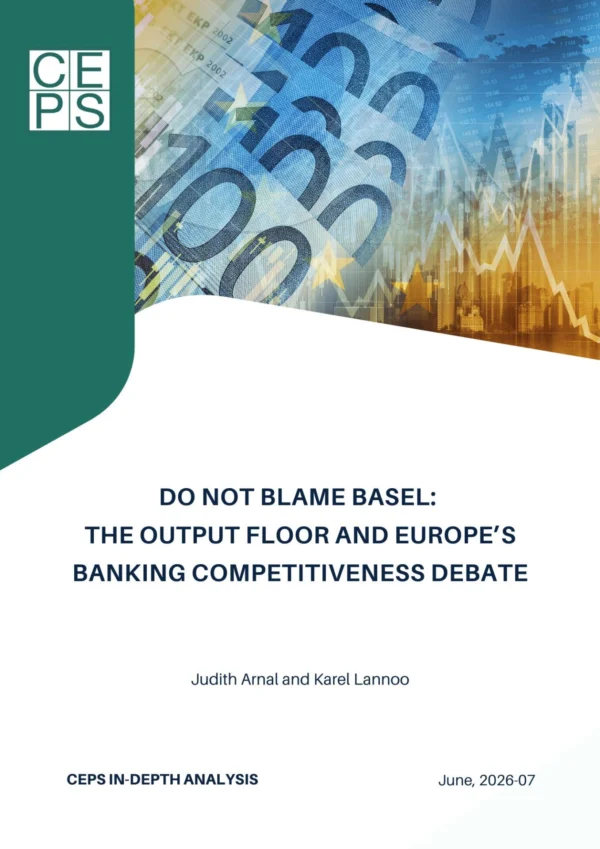
| Attachment | Size |
|---|---|
| Modernisation Final e-version.pdf | 239.57 KB |
This paper argues that the European Commission's Directorate General for Competition, under its new Competition Commissioner Joaquin Almunia, is now facing acute problems in its investigation and prosecution of cartels, which stem from the successful cartel busting era of Commissioner Kroes. The core argument is that the Commission's procedures emerged at a time when the aim was to consult extensively on the development of competition law, and not to prosecute and fine delinquent business entities. These antiquated procedures, which have not been substantially reformed since they came into force in March 1963, involve extensive documentary responses in which the Commission acts as investigator, prosecutor and judge and only allow the Commission to hand down half a dozen decisions condemning cartels per year.
London City University Professor Alan Riley argues for a comprehensive modernisation of the Commission's anti-cartel regime, stripping away the limitations on the application of the leniency programme; streamlining the contentious procedure to encourage a greater throughput of cases and reforming the sanctions regime to allow individual sanctions to ensure personal accountability for price-fixing by corporate executives.
Related Publications
- Required: A bold follow-up to Monti
- Product Market Reforms in EU Countries: Are the methodology and evidence sufficiently robust?
- A New Approach to Innovation Policy in the European Union
- Competition–regulation interface in telecommunications: What’s left of the essential facility doctrine
- The Usage of Scientific Knowledge by Independent Regulatory Agencies
- An evaluation of the quality of impact assessment in the European Union with lessons for the US and the EU
- Single Market Revival
- Who drafts better EU regulation?
- Is REACH going well?
- Treatment of Exclusionary Abuses under Article 82 of the EC Treaty: Comments on the European Commission's Guidance Paper
Editor's choice
-
Financial Markets
-
Politics and Institutions
-
Justice and Home Affairs
-
Economic Policy
-
EU Neighbourhood Policy
-
Economic Policy